
INFORMATION
Kirk Franklin (born January 26, 1970) is an American gospel musician, choir director, songwriter, and producer widely credited with transforming contemporary gospel music by blending traditional church foundations with R&B, hip-hop, and pop influences. Over a career spanning more than three decades, he has become one of the most commercially successful and culturally influential figures in modern gospel, helping bring the genre to mainstream audiences without abandoning its spiritual core.
Born in Fort Worth, Texas, Franklin was raised by his great-aunt Gertrude after being abandoned by his mother as an infant. Recognizing his extraordinary musical talent early in life, Gertrude supported his development by paying for piano lessons when he was just four years old. By the age of seven, Franklin was already reading and writing music, and at eleven he was offered a recording contract—an opportunity his aunt declined because she believed he was too young. Although he grew up deeply involved in church, Franklin struggled during his teenage years, briefly distancing himself from his faith before eventually recommitting to Christianity, which became the foundation of his life and artistry.

In the early 1990s, Franklin organized a 17-member choir composed of friends and community members, forming Kirk Franklin & The Family. Their 1993 debut album, Kirk Franklin & The Family, was a groundbreaking success. It spent more than 100 weeks on Billboard’s Top Gospel Albums chart and became the first gospel debut album to sell over one million copies. Songs such as “Why We Sing” and “Silver and Gold” resonated widely, introducing a fresh sound that appealed especially to younger listeners who were accustomed to contemporary urban music styles.
Franklin expanded his influence with the 1997 release God’s Property, created in collaboration with the Dallas-based choir God’s Property. The album featured the crossover hit “Stomp,” which incorporated hip-hop rhythms and gained significant mainstream radio play, marking a turning point in gospel’s visibility in popular culture. He continued experimenting musically with The Nu Nation Project, which debuted at number one on the Billboard Top Gospel Albums chart and further cemented his reputation as a bold innovator unafraid to challenge traditional expectations within church music.
Throughout the 2000s and 2010s, Franklin released a series of successful and increasingly introspective projects, including The Rebirth of Kirk Franklin, Hero, Losing My Religion, Long Live Love, and Kingdom Book One. These works addressed themes such as doubt, authenticity, social justice, racial inequality, mental health, and the tension between organized religion and personal faith. In particular, Losing My Religion emphasized the idea of relationship over ritual, reflecting Franklin’s desire to present faith as dynamic and deeply personal rather than confined to tradition.

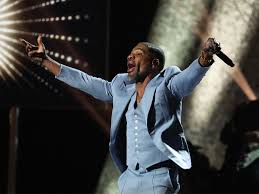
Over the course of his career, Franklin has earned numerous accolades, including more than a dozen Grammy Awards, as well as Stellar Awards, Dove Awards, BET Awards, and NAACP Image Awards. His achievements have made him one of the most decorated artists in gospel history. Beyond music, he has expanded into television and film production, including serving as executive producer for the 2021 Lifetime film Kirk Franklin’s A Gospel Christmas, further demonstrating his influence in faith-based entertainment.
Franklin married Tammy Collins in 1996, and together they blended their families and raised four children. He has been candid about his personal struggles, including battles with addiction and the emotional impact of growing up without his biological father. His openness about therapy, accountability, and spiritual growth has contributed to his reputation as a leader who values transparency and healing alongside success.
Kirk Franklin’s legacy lies not only in record sales and awards but in his cultural impact. By integrating contemporary production techniques, spoken-word interludes, and urban rhythms into traditional choir arrangements, he reshaped the sound and reach of gospel music. His work has influenced a generation of artists who navigate both sacred and mainstream spaces, and he remains a powerful voice advocating authenticity, faith, and artistic courage in the modern era.